You Won’t Believe These Hidden Architectural Gems in Toledo
Toledo, Spain, is more than just a day-trip from Madrid—it’s a maze of forgotten alleyways and centuries-old secrets carved in stone. I wandered off the tourist trails and stumbled upon courtyards, churches, and homes with architecture so unique, it felt like stepping into another world. Think twisted columns, hidden Mudejar towers, and doorways that whisper stories of Jewish, Christian, and Muslim coexistence. This is Toledo beyond the postcards—raw, real, and absolutely stunning.
Why Toledo Deserves More Than a Day Trip
Toledo is often treated as a convenient half-day excursion from Madrid, easily reached by train or car in under an hour. Many visitors follow a predictable path: arrive by mid-morning, climb the hill to the cathedral, snap a few photos at the Alcázar, and return to the capital before sunset. While these landmarks are undeniably impressive, they represent only a fraction of what Toledo has to offer. The city’s true depth lies in its layered past, where Christian, Jewish, and Muslim civilizations left indelible marks on its streets, buildings, and spirit. This confluence of cultures over centuries created an architectural richness that cannot be absorbed in a few rushed hours.
To truly appreciate Toledo, one must slow down. The city was once known as the 'City of Three Cultures,' a rare example of coexistence in medieval Spain. Each community contributed not only to religious life but also to the built environment, blending styles, materials, and artistic traditions. As a result, the urban fabric of Toledo is a living museum, where a single street might reveal a Gothic church next to a former synagogue with Islamic motifs, all nestled within a Roman-era city wall. These details are easily missed when moving too quickly. The hurried tourist sees only the surface; the curious traveler discovers the stories etched in stone.
Spending more than a day allows for a deeper rhythm of exploration. Morning light filters differently through ancient arches; evening shadows reveal textures invisible at noon. A second or third day invites spontaneity—returning to a quiet square, noticing new carvings on a doorway, or striking up a conversation with a local shopkeeper who might point you toward a hidden courtyard. Toledo rewards patience. Its magic unfolds not in checklists but in moments of quiet discovery. To reduce it to a single afternoon is to overlook the very essence of its architectural and cultural soul.
The Magic of Getting Lost in the Old Town
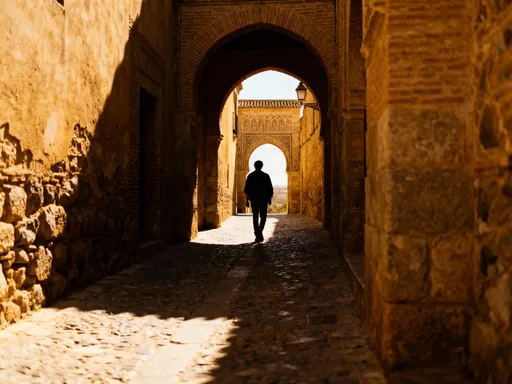
One of the most rewarding ways to experience Toledo is to let go of the map—literally and mentally. The old town is a labyrinth of narrow, cobbled streets that twist and turn with little regard for logic or direction. At first, this can feel disorienting. But with time, the confusion transforms into a kind of freedom. Without a fixed route, every corner holds the possibility of surprise. A sudden opening might reveal a small plaza with a weathered fountain; a narrow passageway could lead to a sunlit courtyard draped in jasmine.
The sensory experience is rich and immersive. The stones underfoot are worn smooth by centuries of footsteps, their surfaces warmed by the Spanish sun. The air carries a mix of scents—baking bread from a neighborhood oven, the faint aroma of wild thyme growing between cracks, the occasional whiff of incense drifting from an open chapel door. Sounds echo in unexpected ways: the distant chime of church bells, the murmur of conversation from a hidden terrace, the rhythmic tap of a craftsman restoring a wooden shutter. These details create a tapestry of presence, grounding the visitor in the moment.
Getting lost also means escaping the predictable. Most guided tours follow a linear path, concentrating crowds in a few well-known spots. By wandering without a plan, you step into a different Toledo—one where time moves slower and attention sharpens. You begin to notice things others overlook: a carved animal on a capital, a faded fresco behind glass, a door with iron studs arranged in a geometric pattern. These are not grand attractions but quiet whispers of history. And yet, they are often the most memorable parts of the journey. The act of wandering becomes a form of listening, allowing the city to reveal itself at its own pace.
Uncovering Mudejar Marvels Off the Beaten Path
Among Toledo’s most fascinating architectural legacies is its Mudejar style—a unique fusion of Christian patronage and Islamic craftsmanship. After the Christian reconquest of the city in the 11th century, Muslim artisans were allowed to remain and continue their work, often under Christian rule. This cultural continuity gave rise to buildings that combined Gothic or Romanesque layouts with distinctly Islamic decorative elements. The result is a visual language of harmony and synthesis, visible in churches, towers, and private homes tucked away in quiet neighborhoods.
One of the most striking features of Mudejar architecture is the use of brickwork in intricate geometric patterns. Unlike the massive stone walls common in northern Europe, these structures employ brick laid in diamond shapes, zigzags, and interlacing bands. These designs are not merely ornamental; they reflect a deep mathematical tradition rooted in Islamic art. Another hallmark is the horseshoe arch, slightly pointed at the top, which appears in doorways, windows, and interior arcades. These arches create a sense of elegance and fluidity, softening the austerity of religious spaces.
Equally impressive are the wooden coffered ceilings, known as artesonado. Crafted from pine or cedar, these ceilings feature elaborate carvings and inlaid geometric or floral motifs, often painted in subtle earth tones. They were originally designed to mimic the star-filled skies of Islamic cosmology, blending spiritual symbolism with technical mastery. Some of the finest examples can be found in lesser-known chapels and former noble residences, where they have survived centuries of change. These spaces are not always marked on tourist maps, but they offer some of the most authentic encounters with Toledo’s multicultural past.
The presence of Mudejar architecture is a testament to a period of remarkable cultural exchange. It reminds us that beauty can emerge from coexistence, that art can transcend religious and political boundaries. To stand beneath a 13th-century ceiling crafted by Muslim hands for a Christian patron is to witness history in three dimensions. These buildings do not shout their significance—they whisper it, inviting closer inspection and deeper reflection.
Secret Courtyards and Forgotten Palaces
One of Toledo’s best-kept architectural traditions is the interior courtyard, or patio. Hidden behind unassuming street-level doors, these private oases are central to the design of many historic homes and former palaces. Unlike the grand façades of public buildings, these spaces were meant for intimacy and tranquility. They served as family gathering places, sources of light and ventilation, and private gardens in a densely built city. Today, many remain closed to the public, but glimpses can be caught through open gates, during local festivals, or by respectful inquiry.
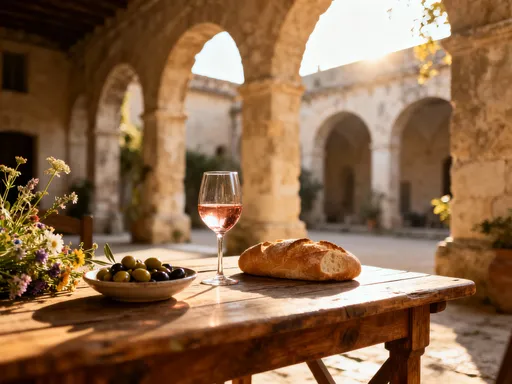
The design of these courtyards varies, but common elements include tiled fountains, climbing ivy, potted citrus trees, and walls covered in azulejos—glazed ceramic tiles often arranged in geometric or floral patterns. Some feature double-tiered arcades with slender columns, creating a sense of airiness despite the surrounding stone. The play of light is carefully considered: morning sun warms the eastern side, while afternoon shadows cool the western edge. These spaces were designed to be lived in, not just admired.
During the annual Festival of the Patios, which takes place in late spring, some homeowners open their courtyards to visitors. This rare opportunity allows the public to step inside spaces that have been preserved for generations. The festival is not commercialized; it is a gesture of cultural pride and community sharing. Visitors walk quietly, often pausing to admire a particularly beautiful tile arrangement or an ancient olive tree growing in a stone planter. The atmosphere is one of mutual respect—between hosts and guests, between past and present.
Even outside the festival, attentive travelers can find traces of these hidden gardens. A slightly ajar door might reveal a glimpse of greenery; a staircase leading upward could suggest a rooftop terrace. These moments of partial access are part of Toledo’s charm. They encourage imagination and restraint, reminding us that not everything needs to be fully seen to be appreciated. The mystery itself is part of the beauty—a quiet lesson in patience and humility.
Jewish Quarter Gems Beyond the Synagogues
The Jewish Quarter of Toledo, known historically as the Judería, is often associated with two well-preserved synagogues: Santa María la Blanca and El Tránsito. Both are remarkable and rightly celebrated. But the surrounding neighborhood holds its own quiet treasures—medieval streets, preserved facades, and architectural details that speak to a once-thriving community. Before the expulsion of Jews from Spain in 1492, Toledo was home to one of the largest and most influential Jewish populations in Europe. Their legacy endures not only in religious buildings but in the very structure of the quarter.
Wandering through the narrow alleys, one notices subtle but telling features. Stone lintels above doorways sometimes bear Hebrew inscriptions, now faint but still legible to those who know how to look. Iron grilles on windows are often shaped into six-pointed stars or other symbolic forms. Some doorways are set slightly askew, a design choice believed to have spiritual significance, deflecting negative energy. These details are not grand monuments, but they carry deep meaning for those who understand their context.
The architecture here reflects both resilience and adaptation. Many homes were built to blend into the Christian-dominated cityscape, with plain exteriors masking more elaborate interiors. This discretion was not only practical but necessary for safety during times of tension. Yet, within these walls, families maintained their traditions, language, and craftsmanship. The stonework, woodcarving, and metalwork found in this area often show a level of precision and artistry that speaks to a culture deeply invested in beauty and meaning.
Walking through the Judería today is an act of remembrance. It is not a reconstructed historic site but a living neighborhood where past and present coexist. A modern café might occupy a building that once housed a rabbi’s study; a bookstore could stand where a Hebrew school once taught. These layers of time do not erase the past—they enrich it. By paying attention to the small details, visitors can honor the memory of a community that contributed so much to Toledo’s identity, even as they enjoy the quiet beauty of its streets.
Views and Vistas Only Locals Know
While the Miradero del Valle offers a famous panoramic view of Toledo, it often comes with crowds, tour buses, and long lines for photos. For a more personal and peaceful experience, there are several lesser-known vantage points favored by residents. These spots provide equally breathtaking perspectives but with a sense of solitude and reflection. They are not always marked on maps, but they are well known to those who take the time to explore.
One such place is a quiet park on the eastern edge of the city, where a footpath follows the curve of the Tagus River. From here, the skyline of Toledo rises dramatically against the sky, its spires and towers silhouetted in the late afternoon light. The sound of the river below adds a soothing rhythm, and benches tucked under trees invite quiet contemplation. Another hidden terrace can be found near a small chapel just outside the main tourist zone. Accessed by a narrow stairway, it opens onto a view that includes both the Alcázar and the cathedral, framed by olive trees and wildflowers.
Perhaps the most intimate perspective comes from a little-used footbridge that crosses a quieter stretch of the river. From this vantage, the city appears almost suspended in time. The red rooftops, ancient walls, and stone bridges create a scene that feels untouched by modernity. Photographers and painters often gather here at dawn, when the light is soft and golden. But even during the day, the spot remains relatively unknown to most tourists. There are no signs, no vendors, no crowds—just the view and the moment.
These places offer more than scenery; they offer space for thought. In a world where travel often means checking off landmarks, these quiet viewpoints remind us to pause. They encourage a different kind of engagement—one that values stillness over speed, observation over consumption. To see Toledo from such a place is not just to admire its beauty, but to feel a part of its enduring presence.
How to Explore Toledo Like a Curious Traveler
Exploring Toledo deeply requires more than just time—it requires intention. The city rewards those who approach it with curiosity, respect, and a willingness to wander. Practical preparation enhances the experience. Comfortable walking shoes are essential; the streets are uneven, often steep, and paved with centuries-old cobblestones. A light backpack with water, a small notebook, and a basic map can be helpful, though relying too much on GPS may discourage spontaneous discovery. Sometimes, the best way to find something remarkable is to get slightly lost.
Timing also matters. Arriving early in the morning or visiting in the late afternoon allows for quieter streets and softer light. Midday brings the largest crowds, especially in summer. Early risers might have a plaza almost to themselves, watching as shopkeepers open shutters and sweep steps. Late-day explorers can enjoy the golden hour, when shadows lengthen and stone glows with warmth. These times of day not only reduce congestion but also heighten the sense of intimacy with the city.
Respect is equally important. When approaching a courtyard that appears open, it is courteous to knock or call out gently before entering. Many of these spaces are private, even when accessible. Avoid touching fragile surfaces, such as carved stone or old wood, and never remove anything, no matter how small. Photography should be done discreetly, without flash in religious or residential areas. These practices ensure that the beauty of Toledo remains preserved for future visitors.
Finally, cultivate openness. Some of the best moments in travel come from unplanned encounters—a conversation with a local artist, a chance glimpse of a hidden arch, a sudden view around a corner. Letting go of rigid itineraries creates space for wonder. Toledo does not reveal itself all at once. It unfolds gradually, like the pages of an old book, each chapter more compelling than the last. The curious traveler understands that the journey is not about collecting sights, but about deepening connection.
Toledo’s true beauty lies not in its famous landmarks alone, but in the quiet details hidden between them. By stepping off the beaten path, travelers gain more than photos—they gain connection, wonder, and a deeper understanding of a city shaped by centuries of coexistence. Let your curiosity lead the way.