This Is What Dining in Arles Feels Like — Pure French Magic
You know that feeling when a place just gets you? Arles did that to me. Between the sun-drenched streets and the Provençal light that feels almost alive, every meal became a moment. I didn’t just eat here — I experienced food. From market stalls to intimate courtyards, the dining scene is quietly stunning, deeply authentic, and yes, totally Instagram-worthy. No filters needed when your plate looks like art and your view looks like a dream. This is southern French living at its most delicious.
The First Bite: Arriving in Arles with Hunger in Mind
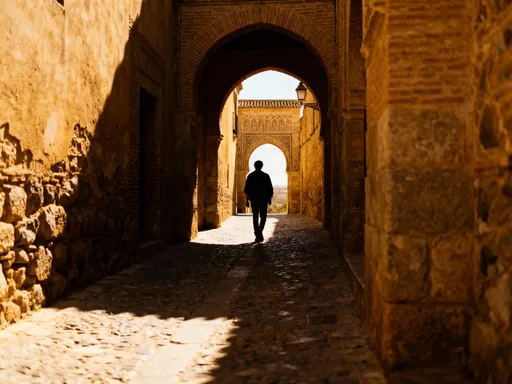
Stepping into Arles feels like entering a painting where time slows and colors deepen. The city rises from the flatlands of the Camargue like a mirage of golden stone, its Roman amphitheater standing sentinel over narrow lanes paved with centuries of footsteps. As the sun climbs, casting honeyed light across limestone facades, the air carries whispers of thyme, warm bread, and the faint briny kiss of the nearby Mediterranean. This is not a city you merely pass through — it’s one you absorb, bite by bite.
From the moment you arrive, hunger takes on a new rhythm. It’s not just about sustenance; it’s about ritual. The scent of roasting coffee pulls you toward a corner café, where men in berets sip espresso and newspapers rustle like autumn leaves. A basket of still-warm baguettes passes by on a bicycle, its aroma trailing behind like a promise. Even jet lag fades beneath the weight of such sensory abundance. In Arles, food is not an interruption to your day — it’s the very pulse of it.
And it’s this seamless integration of dining into daily life that makes the city so captivating. Meals are not rushed affairs squeezed between sightseeing. They are events, deliberately paced, deeply social. Whether it’s a mid-morning pastry enjoyed under a striped awning or a late-afternoon glass of rosé sipped as shadows stretch across the square, every act of eating feels intentional, unhurried, and profoundly satisfying. Arles teaches you to savor — not just the food, but the moment.
Why Arles? The Secret Behind Its Rising Food Scene
Arles’ culinary reputation isn’t built on celebrity chefs or Michelin stars — though a few quietly shine — but on something far more enduring: its terroir. Nestled in the heart of Provence, the city sits at the crossroads of fertile river plains and sun-baked hills, where the Rhône River deposits rich silt and the mistral wind sweeps clean the air. This land yields some of France’s most vibrant produce: plump tomatoes streaked with crimson, glossy black olives cured in sea salt, and herbs so fragrant they perfume entire market aisles.
What sets Arles apart from larger cities is its human scale. With a population under 55,000, it’s large enough to support a diverse food culture but small enough that every boulangerie, fromagerie, and wine bar feels personal. Chains are rare; instead, family-run establishments dominate, often passed down through generations. You’re not just buying bread — you’re buying from a baker whose grandfather kneaded dough in the same oven. This continuity fosters a deep respect for tradition, yet leaves room for quiet innovation.
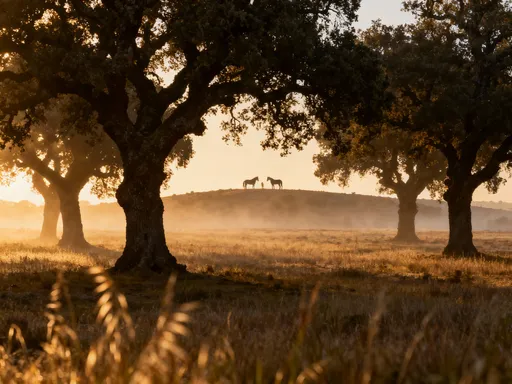
Culturally, Arles is a meeting point. Its roots are firmly Provençal, but the influence of the Camargue — with its wild horses, salt flats, and rice fields — adds a rustic, earthy dimension to the cuisine. There’s also a subtle Catalan touch, a legacy of proximity to Spain, seen in dishes like brandade de morue or the occasional use of smoked paprika. This blend creates a culinary identity that is both rooted and evolving, familiar yet full of surprises. It’s food that tells a story — of land, history, and community.
Morning Light & Market Charm: Where Locals Eat First
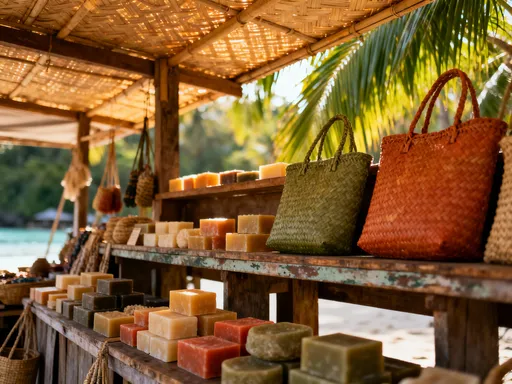
If Arles has a beating heart, it’s the morning market at Place du Bourg. Long before the tourist buses arrive, the square comes alive with the bustle of locals doing what they’ve done for generations: selecting the day’s ingredients with care. Stalls overflow with seasonal abundance — pyramids of figs split open like jewels, bunches of lavender tied with twine, wheels of goat cheese dusted with ash. The air hums with the chatter of vendors, the clink of ceramic bowls, and the rustle of paper bags being filled.
This is where dining begins — not at the table, but at the source. A woman in a floral apron chooses artichokes by their weight and sheen. A man samples olives from a wooden barrel, nodding approval before buying a paper cone full. A young couple lingers at a honey stand, tasting chestnut honey so dark and rich it tastes like forest earth and autumn sun. Every transaction feels like a small celebration of flavor, a reaffirmation of what good food should be: fresh, local, and full of character.
Breakfast in Arles is simple, but never ordinary. At a zinc-topped café counter, a barista pulls a perfect espresso while a regular orders a café crème and a tartine — a thick slice of baguette rubbed with garlic, topped with tomatoes, and drizzled with olive oil. The bread crackles under the knife, the tomatoes release their juice, and the oil pools like liquid gold. It’s a dish that requires no fanfare, yet delivers maximum satisfaction. Nearby, a boulangerie door swings open, releasing a cloud of buttery steam. Inside, golden chouquettes and almond croissants glisten under glass. This is the rhythm of the morning: unhurried, sensory, deeply nourishing.
Lunch Like a Local: Courtyards, Wine, and Slow Time
By midday, the sun hangs high, and Arles reveals one of its best-kept secrets: the *cours*, or hidden inner courtyards. Tucked behind unassuming doorways, these leafy oases bloom with small restaurants, shaded by wisteria and cooled by stone walls. Tables are close together, not from lack of space, but from a sense of intimacy. Here, lunch is not a break — it’s an experience, often lasting two hours or more, where time dissolves into conversation, wine, and shared dishes.
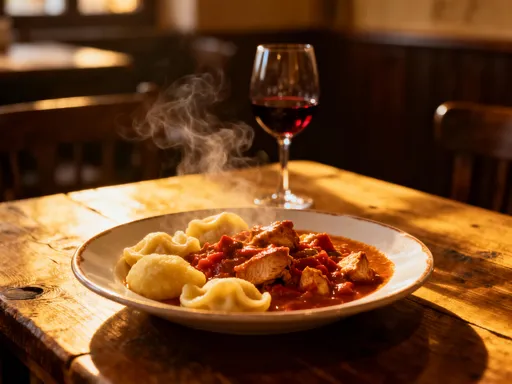
The menu is unpretentious but deeply satisfying. A plate of tapenade arrives, its glossy black surface flecked with capers and garlic, served with thick slices of toasted bread. Pissaladière, Provence’s answer to pizza, comes hot from the oven — a golden crust layered with sweet caramelized onions, anchovies, and olives. Grilled sardines, caught that morning off the coast, are laid on a bed of lemony greens, their skin crisp and smoky. And then there’s Camargue rice, a local treasure grown in the wetlands, often served in a pilaf with wild mushrooms or as a base for duck confit.
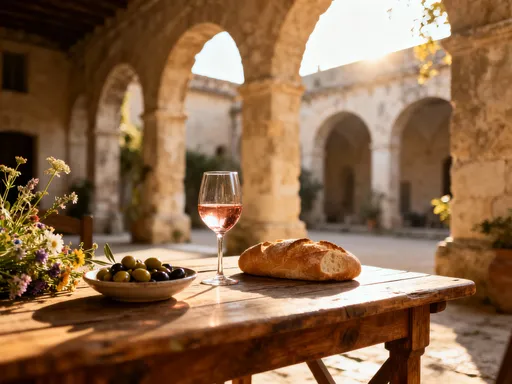
Wine flows freely, usually a crisp white from nearby Cassis or a pale rosé from Tavel, served in carafes that catch the light. Bottles of mineral water appear without being asked — a small gesture, but one that speaks to the care taken in these places. The pace is glacial compared to city dining. No one checks their watch. No one rushes the waiter. Instead, there’s laughter, the clink of glasses, and long pauses between bites, as if each mouthful deserves reflection. This is the essence of Provençal dining: not excess, but presence.
Golden Hour Dining: When the Light Matches the Flavor
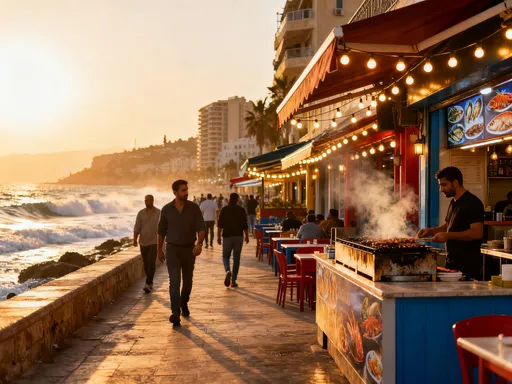
As the sun begins its descent, Arles transforms. The golden light that inspired Van Gogh returns, bathing the city in a warm, ethereal glow. This is the hour when dining becomes poetry. Along the banks of the Rhône, tables are set beneath plane trees, their leaves trembling in the evening breeze. In secluded garden terraces, candles flicker to life, their flames dancing in the softening air. The day’s heat recedes, replaced by a gentle coolness that makes every sip of wine more refreshing, every bite more vivid.
One memory stands out: a bowl of bouillabaisse enjoyed at a riverside table as the sky turned from gold to amber to deep rose. The broth, rich with saffron and fennel, steamed gently, carrying the scent of the sea. Within it, chunks of local fish — monkfish, sea bass, red mullet — swam alongside potatoes and mussels. A side of rouille, that spicy garlic-and-saffron mayonnaise, was spread thickly on toasted bread. With each spoonful, the flavors deepened, the light dimmed, and the world narrowed to this moment: the clink of cutlery, the hum of cicadas, the distant laughter of a family at the next table.
There’s something almost sacred about dining at this hour in Arles. The city feels suspended between day and night, between movement and stillness. Conversations grow softer, gestures more deliberate. Even the food seems to slow down — not in temperature, but in how it’s consumed. There’s no need to finish quickly. No need to move on. This is not just a meal; it’s a meditation. And as the first stars appear above the Roman tower, you realize that you’re not just eating — you’re participating in a ritual older than memory.
The Instagram Effect: Beauty That Doesn’t Feel Forced
In an age of curated feeds and staged perfection, Arles offers something rare: beauty that feels effortless. You don’t need to angle your phone or wait for the perfect lighting. A simple table set with rustic pottery, a linen napkin, and a sprig of wildflowers in a jam jar is inherently photogenic. The food arrives on mismatched plates — some chipped, all charming — because no one is trying to impress. And yet, every image feels like a still from a film, a moment caught in amber.
There’s a quiet confidence in this aesthetic. The bistro doesn’t need designer chairs to feel elegant. The wine doesn’t need a fancy label to taste good. A tomato, sliced open and drizzled with oil, becomes a work of art because it’s perfectly ripe, grown in soil that knows the sun. This authenticity is what makes the visuals so powerful. You’re not just capturing a meal — you’re documenting a way of life, one that values substance over style, depth over dazzle.
And perhaps that’s why so many photos from Arles feel alive. They’re not just pretty — they’re honest. The crumpled napkin, the half-empty wine glass, the crumbs on the tablecloth — these aren’t flaws. They’re proof that life happened here. That someone laughed, lingered, and loved what they ate. In a world obsessed with perfection, Arles reminds us that the most beautiful moments are often the unposed ones.
How to Eat Your Way Through Arles (Without Trying Too Hard)
The best way to experience Arles’ food culture is also the simplest: follow the locals. Arrive midweek, when the city belongs to its residents, not tour groups. Wander without a map, letting your nose guide you. Stop at the boulangerie where the line is longest. Sit at the café where the old men play pétanque in the square. These are the places where authenticity thrives.
Learn a few French phrases — a simple “bonjour” when you enter a shop, a “merci” when you leave — and you’ll be rewarded with warmer service, maybe even a taste of something not on the menu. A vendor might offer you a sample of goat cheese with a wink. A waiter might recommend the day’s special in a lowered voice, as if sharing a secret. These small exchanges are part of the meal, enriching it in ways no recipe can capture.
A loose itinerary works best. Start at the market, where you can pick up ingredients for a picnic or simply soak in the energy. Then, settle into a café for a mid-morning coffee and pastry. By lunchtime, let your exploration lead you to a hidden courtyard or a sun-dappled terrace. In the late afternoon, visit a wine bar for a tasting of local Côtes du Rhône. And for dinner, don’t overplan. Let the evening unfold — perhaps you’ll stumble upon a family-run restaurant where the owner greets you like an old friend.
The truth is, some of the most memorable meals in Arles happen by accident. A closed sign forces you into a different bistro. A sudden rainstorm leads you to a cozy wine cellar. A conversation with a local reveals a hidden gem you’d never have found alone. These unplanned moments are not detours — they’re the journey. And they remind you that the best food experiences aren’t about perfection. They’re about connection, spontaneity, and the joy of discovery.
Wrap up by connecting food, place, and memory — how dining in Arles stays with you not because it was fancy, but because it felt true. Encourage slow travel, mindful eating, and letting destinations reveal themselves one bite at a time. End with a poetic push: Some cities feed your eyes. Arles feeds your soul — one sun-ripened bite at a time.