Frame the Sky: Chasing Light and Lines in Auckland’s Architectural Wild
Auckland doesn’t just sit on the land—it shapes it. As a city built across volcanic cones and coastal cliffs, its architecture defies expectations at every turn. From soaring glass towers reflecting the harbor to raw concrete galleries tucked into quiet neighborhoods, the structures here tell stories of culture, landscape, and innovation. If you're chasing unique angles through your lens, Auckland’s built environment offers a rhythm of contrasts—modern and organic, urban and wild—that makes every shot feel alive. More than just a backdrop for postcard photos, this city invites thoughtful observation, rewarding those who slow down to notice how design dialogues with nature, history, and community. This journey into Auckland’s architectural soul is not about capturing perfection, but about discovering meaning in form, light, and line.
The Skyline Paradox: Where Glass Meets Volcanic Rock
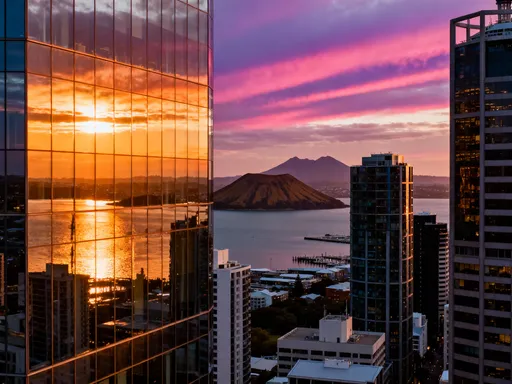
Auckland’s skyline stands apart from other global cities—not because of its height, but because of its restraint. Unlike metropolises that reach aggressively toward the clouds, Auckland’s urban core unfolds laterally, shaped by the very earth beneath it. The city sits atop a field of more than 50 dormant volcanoes, each a silent guardian of geological memory. This unique foundation has led to strict building height regulations designed to preserve sightlines to these natural landmarks and mitigate risks associated with future volcanic activity. As a result, the skyline favors breadth over elevation, creating wide, open vistas ideal for architectural photography that emphasizes context over competition.
Modern towers such as the ASB Bank Tower and Commercial Bay Tower rise with elegance, their glass facades mirroring the shifting hues of the Waitematā Harbour and surrounding hills. Yet they do not dominate. Instead, they coexist with landmarks like Maungawhau (Mount Eden), one of the highest volcanic cones in the city, whose symmetrical crater offers a panoramic stage from which to photograph the interplay between built and natural forms. From this vantage point, the city appears not as an imposition on the land, but as an extension of it—steel and stone speaking in quiet harmony.
For photographers, this lateral sprawl presents a rare opportunity: the ability to capture layered compositions where distant skyscrapers align with foreground trees, roads, and rooftops. Golden hour is especially transformative. As the sun dips behind the Waitākere Ranges to the west, warm light washes across the city, illuminating the textures of brick, glass, and concrete. Parnell Rise, with its gently sloping road lined by historic villas and native planting, becomes a natural frame for long-exposure shots that blend residential charm with downtown geometry. Similarly, the Karangahape Road overpass offers a dynamic urban perspective—train lines cutting through the midground, buildings receding into the haze, and the volcanic silhouette of Maungakiekie (One Tree Hill) anchoring the southern horizon.
To make the most of these locations, use a wide-angle lens to emphasize depth and spatial relationships. A tripod ensures sharpness during low-light conditions, while a polarizing filter can reduce glare on glass surfaces, revealing reflections and structural details often lost in harsh daylight. The key is patience—waiting for the right light, the right shadow, the moment when a passing cyclist or pedestrian adds scale and life to an otherwise static scene. In Auckland, architecture is not frozen in time; it breathes with the day.
Harbour Reflections: Capturing Water, Light, and Steel
The Waitematā Harbour is more than a body of water—it is a living canvas. Its surface shifts constantly, responding to wind, tide, and time of day, transforming the city’s architecture into fluid abstractions. For photographers, this means no two reflections are ever the same. Wynyard Quarter and the Viaduct Basin emerge as prime locations for capturing this ephemeral beauty, where modern structures meet the sea in a dance of symmetry and distortion.
The Maritime Museum, with its sweeping, wave-inspired roof, appears even more dynamic when mirrored in the harbor’s stillness at dawn. Early mornings offer the best conditions for reflection photography, when the water is calm and the city lights still flicker like stars. At this hour, the geometric precision of the Spark Arena—its angular steel framework and translucent panels—doubles in the wet surface, creating a surreal sense of balance. The trick is to shoot low. Positioning the camera just above water level, sometimes using a tripod with extended legs or a remote trigger, maximizes the reflection and minimizes distracting ripples.
Polarizing filters play a crucial role here. By adjusting the filter, photographers can either enhance or reduce surface glare, depending on the desired effect. To preserve reflections, minimize polarization; to reveal details beneath the surface or in glass facades, increase it slightly. Timing also matters. Tidal changes alter water levels and flow patterns, especially near moored boats and floating pontoons. A rising tide often brings smoother conditions, while outgoing tides can create interesting ripples that add texture to reflections.
Wynyard Quarter’s Silo Park, with its repurposed grain silos and open promenades, offers multiple vantage points. The circular cutouts in the old concrete silos act as natural frames, turning the harbor and skyline into living dioramas. At sunset, the western light gilds the high-rises, and their elongated reflections stretch across the water like rivers of gold. Long exposures—ranging from 5 to 30 seconds—smooth out wave motion, turning choppy surfaces into glassy mirrors. For added depth, include elements like mooring lines, buoys, or silhouetted yachts in the foreground to anchor the composition.
This interplay of water and structure reminds us that architecture in Auckland is never static. It is seen, reseen, and transformed by the elements. To photograph it is to capture not just buildings, but moments—fleeting alignments of light, weather, and movement that will never repeat.
Brutalism Reimagined: The Power of Concrete in Public Spaces
Beneath Auckland’s polished glass and coastal charm lies a quieter, more textured architectural language: Brutalism. Often misunderstood as cold or imposing, Brutalist structures in the city reveal unexpected warmth when viewed through a photographer’s eye. Characterized by raw concrete, geometric massing, and functional honesty, these buildings offer rich visual material—deep shadows, strong lines, and tactile surfaces weathered by time and climate.
One of the most compelling examples is the University of Auckland’s School of Architecture & Planning building on Symonds Street. Its exposed concrete façade, marked by repetitive vertical fins and deep-set windows, creates a rhythm of light and shadow that shifts throughout the day. When sunlight strikes at an angle, the building becomes a study in contrast—solid and void, rough and smooth. Nearby, the Auckland Art Gallery Toi o Tāmaki extension incorporates Brutalist elements with surprising sensitivity. The heavy concrete forms are softened by climbing vines, pōhutukawa trees, and the dappled light filtering through overhead canopies, creating a dialogue between human design and natural growth.
Photographing Brutalism requires a shift in perspective. Rather than capturing entire façades head-on, which can appear flat, photographers benefit from exploring side angles, close-ups, and human-scale details. A rusted handrail, a cracked concrete joint, or the imprint of wooden formwork left in the poured surface tells a story of materiality and passage of time. Overcast days are ideal for this style of photography, as diffused light reduces harsh contrasts and reveals subtle tonal variations in the concrete. A neutral density filter can help manage exposure in mixed lighting conditions, while a prime lens with a wide aperture allows for selective focus on textured details.
These buildings were designed not for spectacle, but for purpose and permanence. They invite contemplation. When photographing them, consider the role of people within the frame. A student walking beneath a concrete arcade, a gardener trimming ivy along a retaining wall—such moments introduce life and scale, transforming stark forms into lived spaces. In doing so, the images move beyond documentation to storytelling, capturing how architecture endures not just in structure, but in use.
Māori Design Language in Modern Form
Auckland’s architecture gains deeper meaning when viewed through the lens of Māori cultural heritage. Increasingly, contemporary buildings incorporate indigenous design principles—not as ornament, but as integral expressions of identity, place, and connection. This integration reflects a broader cultural shift toward acknowledging Te Ao Māori (the Māori worldview) in public life, and for photographers, it offers a chance to capture architecture that is both modern and deeply rooted.
The Tāmaki Paenga Hira Auckland War Memorial Museum stands as a powerful example. Perched on the slopes of Pukekawa, the museum’s design draws from traditional Māori meeting houses (wharenui). Its layered rooflines echo the form of a waka (canoe), symbolizing journey and unity, while carved pou (posts) and tukutuku (woven wall panels) tell ancestral stories. Photographing these elements requires care and respect. Rather than treating them as abstract patterns, aim to capture them in context—framed by natural light, shadowed by surrounding trees, or seen through the quiet presence of visitors pausing to reflect.
Interior spaces are equally significant. The museum’s atrium, with its high ceiling and warm wood finishes, creates a sense of whanaungatanga (relationship and belonging). Use natural light to enhance the warmth of these spaces—early morning sun streaming through clerestory windows, or soft afternoon light illuminating carved details. A tripod allows for slower shutter speeds in lower light, preserving detail without introducing noise. Avoid flash, which can disrupt the atmosphere and disrespect cultural protocols around sacred or significant spaces.
Another notable example is the Manukau Institute of Technology, where modern educational facilities incorporate Māori spatial concepts. The layout encourages communal gathering, with open courtyards and covered walkways that mirror the function of a marae (traditional meeting ground). Roof forms are inspired by the sails of ocean-going waka, symbolizing exploration and knowledge. Photographing these spaces benefits from wide-angle shots that capture the flow of movement and interaction, as well as tighter compositions focusing on symbolic carvings or inlaid patterns in flooring and walls.
Respectful framing is essential. This means avoiding intrusive angles, refraining from climbing on cultural elements, and never using images for commercial purposes without permission. When in doubt, observe how local visitors engage with the space—quietly, reverently—and mirror that approach. By doing so, photographers honor not just the architecture, but the living culture it represents.
Suburban Surprises: Hidden Gems Beyond the City Core
While downtown Auckland draws the most attention, some of its most inventive architecture lies in the suburbs. Neighborhoods like Ponsonby, Grey Lynn, and Takapuna are laboratories of adaptive reuse, where old structures are reimagined with bold contemporary interventions. These hybrid spaces—part heritage, part innovation—offer photographers a rich tapestry of contrasts: weathered wood beside polished steel, Victorian detailing meeting minimalist extensions, and quiet streets hosting unexpected bursts of design.
Ponsonby, in particular, is a treasure trove. Once an industrial and working-class area, it has evolved into a hub of creative reinvention. Here, a former church may now serve as a design studio, its stained-glass windows refracting light onto modern concrete floors. A 19th-century villa might feature a glass-walled addition that floats above a landscaped garden, blurring the boundary between inside and outside. These transformations are not about erasure, but dialogue—between past and present, preservation and progress.
Mid-morning light is ideal for exploring these areas. The sun, now high enough to illuminate side streets but not so harsh as to create deep shadows, reveals textures and colors in full clarity. Walk slowly. Turn down alleys, peek through gates (without trespassing), and look for details: a repurposed chimney, a steel staircase wrapping an old brick wall, a rooftop garden visible from a neighboring path. A 35mm or 50mm lens works well for street-level shots, offering a natural field of view that captures both context and detail.
When possible, engage with local architects or homeowners—many are proud of their projects and happy to share the story behind the design. These conversations can deepen your understanding and lead to better, more informed photographs. A simple “May I take a photo?” shows respect and often opens doors—literally. Some homeowners even invite photographers to return at golden hour for optimal lighting.
These suburban spaces remind us that architectural innovation isn’t confined to city centers. It thrives in quiet streets, in thoughtful renovations, in the careful balance of old and new. For the observant photographer, every corner holds the potential for discovery.
Industrial Aesthetics: Wynyard Quarter’s Reborn Fabric
Wynyard Quarter is a testament to sustainable urban renewal. Once a working port filled with cargo cranes and storage sheds, it has been transformed into a vibrant waterfront district that honors its industrial past while embracing the future. The area’s architecture retains the raw materials of its former life—steel, concrete, weathered timber—but reconfigures them into spaces for living, working, and gathering.
The silos of Silo Park, originally used for grain storage, now serve as event spaces and art installations. Their cylindrical forms, marked by metal bands and narrow slits, create dramatic light patterns when the sun strikes at low angles. Photographers can use these openings to frame distant views of the harbor or capture the interplay of shadow and surface texture. Nearby, the container market—built from repurposed shipping containers—offers a modular, colorful streetscape. The bright hues and stacked forms create a playful geometry, especially when people move through the space, adding scale and energy.
Open-air installations, such as the glowing orbs of the “Field of Light” or the kinetic sculptures along the promenade, invite creative experimentation. Long exposures at night turn moving lights into trails of color, while wide-angle shots capture the dynamic relationship between structure and human activity. Cyclists, joggers, and families strolling along the waterfront bring life to static forms, reminding us that architecture is meant to be inhabited.
Night photography here is particularly rewarding. Illuminated walkways, dockside lighting, and the reflections of city lights on wet surfaces create a luminous urban tapestry. Use a tripod and experiment with shutter speeds—from 10 seconds to several minutes—to capture light trails from passing boats or the soft glow of LED installations. A remote shutter release prevents camera shake, ensuring crisp results.
Wynyard Quarter proves that beauty can emerge from function. Its architecture does not hide its origins; it celebrates them. For photographers, this means every surface tells a story—not of perfection, but of transformation.
Framing the Future: Photography as a Lens on Urban Identity
Photographing architecture in Auckland is more than a technical exercise—it is an act of understanding. Each building, bridge, and public space reflects choices made about land, culture, and community. Through the lens, travelers gain a deeper connection to the city’s identity, seeing not just what has been built, but why. Auckland’s architectural landscape—diverse, evolving, and deeply tied to its volcanic and coastal setting—invites patience, perspective, and respect.
The most powerful images often come from stillness: waiting for the shadow of a tower to align perfectly with a sidewalk, capturing the moment a child’s hand touches a carved pou, or noticing how morning fog softens the edge between sky and steel. These are not grand gestures, but quiet connections—moments when form and feeling meet.
As cities continue to grow and change, photography becomes a way of preserving memory and inspiring thought. It encourages us to look beyond the obvious, to seek stories in surfaces, and to appreciate how design shapes the way we live. In Auckland, where nature and structure coexist in constant conversation, every photograph is an invitation—to see, to feel, and to remember.
So pick up your camera, step into the light, and let the city guide your gaze. Frame not just the skyline, but the soul of the place. In Auckland, architecture is not just built. It is lived.