Hidden Canvases: Chasing Light in Sucre’s Secret Art Spots
You know that feeling when a city surprises you with beauty you didn’t expect? Sucre isn’t just Bolivia’s quiet capital—it’s a living gallery. I went looking for peace and found vibrant art spaces tucked in colonial corners, where light dances across murals and creativity breathes through old stone walls. If you’re into photography, this place is pure magic. Let me take you behind the scenes of Sucre’s most authentic, off-the-beaten-path artistic soul—where every shutter click tells a story.
The Quiet Pulse of Sucre
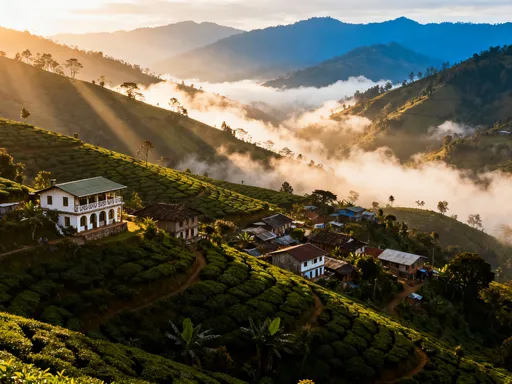
Sucre, often overlooked in favor of more dramatic South American destinations, holds a stillness that invites deep observation. As the constitutional capital of Bolivia, it carries dignity without pomp, elegance without excess. Its historic center, recognized by UNESCO, unfolds in gentle gradients of white limestone and terracotta rooftops, climbing the Andean hills with quiet confidence. The city’s altitude—around 2,800 meters—lends the air a crisp clarity, sharpening contrasts and intensifying the sky’s blue. But it’s not just geography that makes Sucre special; it’s the rhythm. Life here moves at a pace that allows you to notice—the flutter of a curtain in an open window, the chime of a distant church bell, the soft scratch of a brush against canvas from an unseen studio.
This serenity is precisely what draws photographers and creatives seeking authenticity. Unlike cities that shout with noise and neon, Sucre whispers. Its calm streets, largely free of heavy traffic, create ideal conditions for unhurried exploration. Early mornings offer the softest light, when the sun climbs slowly over the hills and spills golden pools into courtyards and alleyways. During these hours, shadows stretch long and delicate across cobblestones, outlining the geometry of colonial arches and wrought-iron grilles. It’s a time when the city feels suspended, as if holding its breath before the day begins. For those with a camera, this is when magic happens—when light becomes a collaborator rather than just a condition.
The golden hour, just before sunset, casts a warm glow that transforms Sucre’s white facades into radiant canvases. This is when murals seem to come alive, their colors deepening and textures emerging in relief. The combination of natural light and architectural harmony gives photographers a rare gift: consistency. Whether you’re shooting wide-angle street scenes or intimate close-ups, the city’s aesthetic coherence ensures that every frame feels intentional. There’s no need to chase perfection; it arrives naturally, quietly, in the ordinary moments between sunrise and dusk.
Art in Unexpected Corners
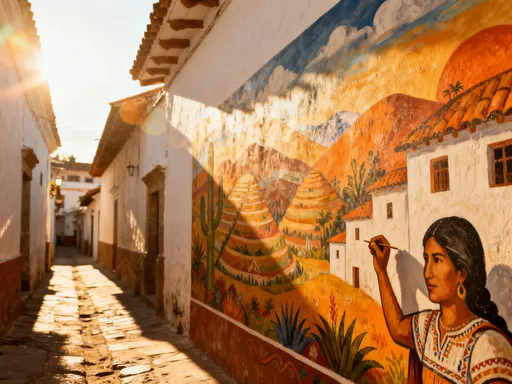
In Sucre, art doesn’t wait behind museum ropes or inside locked galleries. It spills into the open, claiming forgotten corners, cracked walls, and shadowed passageways. You might turn a narrow alley in the Calvo neighborhood and suddenly face a towering mural of a Quechua woman, her eyes steady, her shawl woven with symbols of earth and sky. Or you might stumble upon a courtyard where tiles have been rearranged into a mosaic of Andean cosmology, each piece placed with care and meaning. These are not tourist attractions manufactured for cameras—they are expressions of identity, resilience, and memory, born from local hands and rooted in community.
What makes Sucre’s street art so compelling is its dialogue with history. Colonial buildings, some centuries old, become backdrops for contemporary storytelling. A fresco might stretch across the side of a former convent, blending Catholic iconography with indigenous motifs—a fusion that reflects Bolivia’s complex cultural layers. Artists use the city’s architecture not as a neutral surface, but as a partner in meaning-making. A crumbling wall becomes a metaphor for memory; a restored balcony frames a new narrative. This interplay between old and new, decay and renewal, creates visual tension that is both beautiful and thought-provoking.
For photographers, these spaces offer endless compositional possibilities. The contrast between smooth limestone and textured paint, between shadow and saturated color, invites experimentation. A single wall might contain multiple layers of art—older murals peeking through newer ones, graffiti overlapping traditional patterns—creating a palimpsest of expression. Capturing these details requires slowing down, looking closely, and resisting the urge to capture everything at once. The best images often emerge from patience: waiting for a passerby to walk through the frame, or for sunlight to shift just enough to illuminate a hidden symbol.
Photographing the City’s Creative Heartbeat
The heart of Sucre’s artistic pulse beats strongest in neighborhoods like Calvo and around Plaza 25 de Mayo, where colonial elegance meets vibrant modern expression. These areas are not designed for mass tourism, which means they retain an authenticity often lost in more commercialized cities. Here, photography becomes an act of discovery rather than documentation. You’re not just recording what’s visible—you’re interpreting the rhythm of a place where art and daily life are inseparable.
One of the most striking visual dynamics in Sucre is the contrast between the city’s predominantly white architecture and the bold colors of its murals. A single red flower painted on a pale wall can dominate a composition, drawing the eye like a focal point in a symphony. To capture this effectively, photographers should pay attention to balance. Use the rule of thirds to position vibrant elements against neutral backgrounds, or experiment with symmetry by framing a mural within an arched doorway. Wide-angle lenses can emphasize depth, showing how art integrates into the urban fabric, while macro shots reveal the texture of paint, the cracks in the wall, the fingerprints left by the artist.
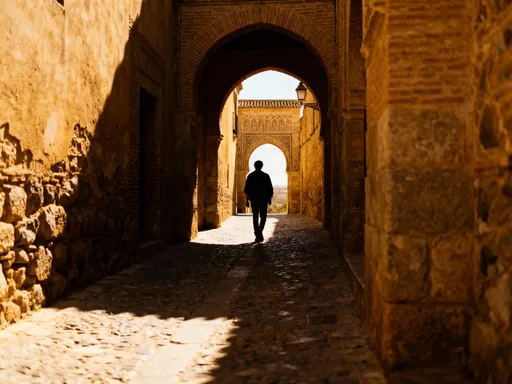
Natural lighting is your most powerful tool. Midday sun can be harsh, washing out colors and creating unflattering contrasts. Instead, aim for early morning or late afternoon, when the light is diffused and directional. Side lighting, in particular, enhances texture—bringing out the brushstrokes on a mural or the grain of wooden doors. Backlighting can create silhouettes, turning a simple figure walking past a painted wall into a dramatic element. And on overcast days, the soft, even light acts like a giant diffuser, ideal for capturing color without glare.
But technical skill is only part of the equation. The most compelling photographs in Sucre are often those that capture moments of human connection with art. A child pausing to trace a painted animal with her finger. An elder sitting on a bench, gazing at a mural of ancestors. These are the images that carry emotion, that tell stories beyond aesthetics. They require presence, respect, and sometimes, silence. Wait. Watch. Let the moment come to you. When the alignment of light, subject, and meaning occurs, the resulting image will feel less like a capture and more like a gift.
Inside Local Art Studios and Cultural Centers
Beyond the streets, Sucre’s creative spirit thrives in community-run art spaces and informal studios tucked into repurposed homes. These are not glossy galleries with price tags and curators, but working environments where art is made, shared, and taught. Some operate as collectives, where artists pool resources and mentor young talent. Others are run by cultural associations that host workshops, exhibitions, and restoration projects. Visiting these spaces offers a rare glimpse into the process behind the art—the sketches on tables, the jars of pigment, the quiet concentration of a painter lost in detail.
Many of these studios welcome respectful visitors, especially those who approach with genuine interest rather than mere curiosity. Some offer guided tours or open-house events, allowing guests to observe without disrupting. Photography is often permitted, but always with permission. The key is to move slowly, speak softly, and listen more than you shoot. When photographing artists at work, focus on the details: hands shaping clay, brushes mixing color, eyes studying a canvas. These close-ups convey more about creativity than any full-body portrait could. Avoid intrusive angles or flash—natural light preserves the mood and respects the space.
Engaging with artists can deepen your understanding and enrich your photography. A brief conversation might reveal the symbolism in a painting, the history behind a pattern, or the inspiration drawn from ancestral traditions. These insights can inform your compositions, helping you move beyond surface beauty to capture meaning. For instance, learning that a recurring spiral motif represents the cyclical nature of life might lead you to frame it within a circular window or use a spiral staircase as a leading line. Knowledge becomes a lens.
These studios also reflect Sucre’s commitment to cultural preservation. Many artists work with natural pigments, traditional weaving techniques, or restored colonial materials, blending heritage with innovation. Documenting this fusion—whether through images of handmade brushes or close-ups of embroidered fabric—adds depth to your visual narrative. It reminds viewers that art in Sucre is not just decoration; it’s a living practice, a form of resistance, a way of remembering.
The Rhythm of Creative Daily Life
In Sucre, art is not confined to studios or murals—it breathes through everyday life. Visit the central market, and you’ll find vendors selling hand-embroidered blouses, each stitch a testament to generations of skill. Their stalls are adorned with painted signs, some whimsical, others bold and practical, all reflecting individual style. Children play near fountains, drawing with chalk on pavement—temporary masterpieces soon washed away by rain or footsteps. An old man repairs shoes on a corner, his wooden bench covered in colorful scraps of leather, arranged almost like a collage.
These moments are not staged. They are the quiet expressions of a culture where creativity is not a profession, but a way of being. To photograph them authentically, you must adopt an ethic of observation. Approach with humility. Ask with your eyes before you raise your camera. A smile, a nod—these small gestures build trust. Never photograph someone in distress or private grief. Instead, look for joy, pride, concentration. A woman arranging textiles with care, her hands moving with precision. A boy laughing as he shows his drawing to a friend. These are the images that honor the subject.
Street photography in Sucre is not about catching people off guard. It’s about witnessing dignity in motion. Use a discreet lens, stay at a respectful distance when needed, and be prepared to delete a photo if someone objects. Ethical photography is not a limitation—it’s a discipline that deepens your connection to the place. When people see that you see them, not just their clothes or colors, a quiet exchange occurs. Sometimes, they’ll invite you in. You might be offered tea, shown a sketchbook, or asked to take a portrait. These are the moments that transform a trip into a relationship.
Practical Tips for the Art-Focused Traveler
Traveling through Sucre with a photographer’s eye requires preparation, but not excess. A lightweight camera setup is ideal—narrow streets and steep inclines make bulky gear a burden. A 35mm or 50mm prime lens offers versatility, capturing both environmental portraits and architectural details. A small tripod can be useful for low-light shots in courtyards or early morning fog, but a steady hand and higher ISO settings often suffice. Keep your bag simple: extra batteries, a rain cover, and a notebook for jotting down stories behind the images.
Timing matters. Weekday mornings are best for avoiding crowds, especially around popular plazas and markets. By mid-morning, tour groups arrive, and the quiet intimacy fades. If you want to photograph artists in studios, call ahead or visit during advertised open hours. Many spaces close for siesta between 12:30 and 3:00 p.m., so plan accordingly. Late afternoons offer the best light and a return of calm as the city slows again.
Respectful photography is not just ethical—it’s essential to the quality of your work. Always ask before photographing individuals, especially in markets or homes. In many cases, a simple gesture—pointing to your camera and smiling—will suffice. If someone declines, accept it gracefully. Building rapport often leads to better opportunities anyway. You might return the next day to find the same vendor posing proudly in front of her stall, eager to be part of your story.
Combine your photography with local experiences. Pause at a café with a view of a mural, order a cup of Bolivian coffee, and wait. Watch how light changes, how people interact with the art. Some of the best shots come from stillness, not movement. And consider leaving a trace of goodwill—buy a small craft, donate to a community art project, or simply thank those who let you photograph them. Travel that gives back stays with you longer.
Why Sucre’s Art Spaces Stay With You
Months after leaving Sucre, certain images remain vivid: the curve of a painted bird’s wing on a sunlit wall, the concentration in an artist’s eyes as she mixed ochre and indigo, the way a child’s chalk drawing sparkled after a brief rain. These are not just photographs. They are memories etched in light and gesture, moments of connection that transcend the visual. Sucre doesn’t impress with grandeur; it lingers through intimacy. Its art spaces—whether grand murals or a hand-painted sign—speak in whispers, not shouts, and that’s what makes them unforgettable.
True travel photography is not about collecting images, but about cultivating presence. In Sucre, you learn to see differently—to notice the way light defines a shadow, how color carries meaning, how a single detail can represent a culture. The city teaches you to slow down, to look deeper, to listen with your lens. It challenges the obsession with filters and likes, reminding you that the most powerful images are those made with patience, respect, and heart.
For women between 30 and 55—many of whom travel not for escape, but for renewal—Sucre offers something rare: a space to reflect, create, and reconnect. Whether you’re a seasoned photographer or simply someone who carries a phone camera and a curious eye, this city invites you to see beauty in the overlooked, to find art in the everyday, to discover that inspiration doesn’t always come from the famous, but often from the quiet, the humble, the true.
So let Sucre redefine your idea of a must-see destination. Let its hidden canvases remind you that travel is not just about where you go, but how deeply you see. Seek not the perfect shot, but the meaningful moment. Capture not just what’s in front of you, but what stirs within. In the end, the images you carry home are not just on your memory card—they’re in your soul.