How I Fixed My Bone Health While Calming My Mind — No Gym Required
Bone health isn’t just about calcium and aging—it’s deeply tied to how we manage stress and balance our minds. I used to think strong bones meant lifting weights and chugging milk, but after constant aches and restless nights, I realized something was off. Turns out, psychological tension can silently weaken your skeleton. What changed? A few daily habits that support both bone strength and mental calm. This is what actually worked for me—no magic, just science-backed simplicity.
The Hidden Link Between Stress and Weak Bones
For years, the conversation around bone health has focused on nutrients like calcium and vitamin D, or physical activities such as walking and strength training. While these are important, they often overlook a silent but powerful influence: chronic stress. When the mind is under constant pressure, the body responds by releasing cortisol, a hormone designed to help us survive immediate threats. But when cortisol remains elevated over weeks or months—due to work overload, emotional strain, or poor sleep—it begins to interfere with the body’s ability to maintain strong bones.
Bone is not a static structure; it’s alive, constantly renewing itself through a process called remodeling. This delicate balance involves two types of cells: osteoclasts, which break down old bone, and osteoblasts, which build new bone. Under normal conditions, this system works in harmony. However, high cortisol levels tip the scale. Research shows that prolonged stress suppresses osteoblast activity while increasing osteoclast function, leading to a net loss in bone density over time. In simpler terms, when the mind is overwhelmed, the skeleton pays the price.
Many women in their 30s to 50s report unexplained joint stiffness, low back discomfort, or frequent fractures despite adequate calcium intake. Often, these symptoms coincide with periods of emotional upheaval—caring for aging parents, managing family schedules, or navigating career transitions. These are not isolated incidents. They reflect a growing understanding in medical science: the brain and the skeleton are in constant communication. Emotional imbalance doesn’t stay in the mind; it manifests physically, sometimes in the very framework that holds us upright.
Imagine carrying a heavy bag on one shoulder for hours. Over time, the muscle tightens, the posture shifts, and discomfort spreads. Chronic stress acts similarly, but internally. It creates tension that the body cannot release, and one of the places this tension settles is in the bones. Recognizing this connection was the first step toward healing—not just of the skeleton, but of the whole self.
Why Traditional Bone Advice Falls Short
Most public health messages about bone strength focus on three key elements: take calcium, get vitamin D, and stay active. These recommendations are not wrong—they are, in fact, essential. But they often present an incomplete picture. Many women follow these guidelines faithfully, drinking fortified milk, taking supplements, and walking daily, yet still experience declining bone density or frequent discomfort. Why? Because these approaches typically ignore the internal environment in which bones live and grow.
Think of bone health like gardening. You can have the best seeds (calcium), the right amount of sunlight (vitamin D), and water them every day (exercise), but if the soil is toxic or overly acidic, the plants will struggle to thrive. In the human body, stress alters the ‘soil’—the internal biochemical landscape—making it harder for bones to absorb nutrients and rebuild effectively. Even with perfect nutrition, high cortisol levels can block calcium absorption in the intestines and increase its excretion through the kidneys. This means that what you eat may not be what your bones actually receive.
Moreover, physical activity alone does not guarantee bone resilience if the nervous system is in a constant state of alert. Studies have shown that individuals under chronic psychological stress exhibit slower bone healing and lower bone mineral density, even when their physical activity levels are comparable to those who are more relaxed. This suggests that movement without mental calm may deliver only partial benefits. The body needs more than motion; it needs safety, regulation, and balance.
The traditional model treats bone health as a mechanical issue—something to be fixed from the outside in. But emerging research supports a more integrated view: bone strength is also a reflection of internal harmony. When we address only the physical inputs while neglecting emotional well-being, we miss a crucial part of the equation. Healing bones isn’t just about what we consume or how much we move—it’s also about how peacefully we live.
My Turning Point: When Aches Met Anxiety
It started with small things. Waking up with stiff fingers. Feeling a dull ache in my lower back after sitting through dinner. At first, I dismissed it as part of getting older. I was in my early 40s, juggling a full-time job, raising two children, and helping care for my mother. Fatigue felt normal. Discomfort felt inevitable. But then the sleep problems began—lying awake at 2 a.m., heart racing, thoughts circling like storm clouds. I wasn’t just tired; I was wired and worn out at the same time.
I went to my doctor, expecting to find a deficiency or hormonal imbalance. My blood work came back mostly normal. Vitamin D levels were adequate. Calcium was within range. Thyroid function was stable. There was no diagnosis, no clear cause. Yet the aches persisted. I tried increasing my calcium intake, switching to a higher-dose vitamin D supplement, and adding short walks to my routine. Nothing brought lasting relief. That’s when I began to wonder: what if the problem wasn’t just in my bones, but in my nervous system?
One morning, after another sleepless night, I sat on the edge of my bed, rubbing my wrists, and realized I couldn’t remember the last time I had felt truly calm. Not distracted, not busy, not ‘fine’—but deeply, quietly at peace. That moment shifted something in me. I started reading about the connection between stress and physical health, particularly how emotional strain affects the skeletal system. What I found was both surprising and validating: the body keeps score. Every unresolved worry, every suppressed emotion, every night of shallow sleep leaves a trace—not just in the mind, but in the tissues, joints, and bones.
I realized that I had been treating my body like a machine, fueling it with the right inputs but ignoring its signals. The stiffness wasn’t just wear and tear; it was a message. My skeleton was asking for stillness, for safety, for space to heal. That awareness became the foundation of a new approach—one that didn’t rely on pills or intense workouts, but on daily practices that nurtured both my mind and my bones.
The 3 Daily Habits That Transformed My Body and Mind
Healing didn’t happen overnight, but three simple habits became the cornerstone of my recovery. These weren’t extreme changes or time-consuming routines. Instead, they were gentle, sustainable practices that addressed both bone metabolism and nervous system regulation. Each one is supported by research and can be done at home, without special equipment or a gym membership.
The first habit was mindful movement. I began with just ten minutes a day of slow, intentional exercises—mostly tai chi and gentle yoga sequences. Unlike high-impact workouts, these movements emphasize balance, coordination, and breath awareness. What I didn’t expect was how quickly I noticed a difference in my joints. Within two weeks, my morning stiffness began to ease. Research explains why: low-impact, weight-bearing movements stimulate bone remodeling by applying gentle pressure to the skeleton, signaling osteoblasts to build new bone. At the same time, the rhythmic, flowing motions activate the parasympathetic nervous system, which helps lower cortisol levels. It’s a dual benefit—movement that strengthens bones while calming the mind.
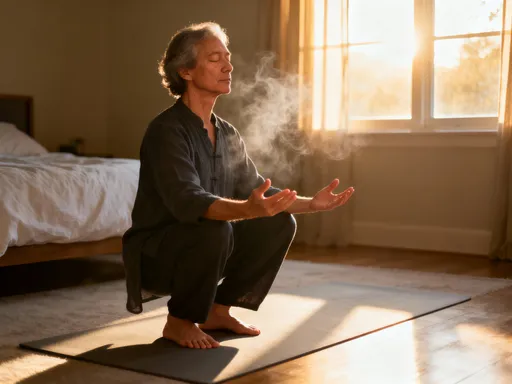
The second habit was breathwork before meals. I started practicing diaphragmatic breathing for five minutes before breakfast and dinner. Sitting quietly, I would inhale slowly through the nose, letting the belly rise, then exhale fully through the mouth. This simple act did more than improve digestion; it shifted my entire state. Deep, slow breathing triggers the vagus nerve, a key regulator of the body’s relaxation response. Within days, I noticed my digestion improved, but more importantly, my sense of urgency around food and time began to soften. Over time, this practice helped reduce my baseline stress levels, creating a more favorable internal environment for calcium absorption and bone repair.
The third habit was nature-based walking. Instead of power-walking on the treadmill, I began taking 20-minute walks in a nearby park, focusing on the sights, sounds, and smells around me. I left my phone behind or kept it on airplane mode. This wasn’t exercise for calorie burn—it was sensory immersion. Studies show that spending time in green spaces lowers cortisol, reduces inflammation, and improves mood. For me, these walks became a form of moving meditation. I noticed that on days I walked in nature, my sleep was deeper, my aches were milder, and my overall sense of well-being increased. The combination of mild physical activity and mental restoration created a powerful synergy for bone and brain health.
How Small Shifts Create Big Changes Over Time
Progress was gradual, but undeniable. After the first month, I slept more soundly. The nighttime anxiety that used to wake me up began to fade. My joints felt looser, especially in the mornings. By the third month, I no longer reached for pain relievers after long days. My energy levels stabilized, and I found myself making healthier food choices without effort—because I felt calmer, I craved less sugar and caffeine.
What surprised me most was how these small habits began to influence other areas of my life. Because I felt more balanced emotionally, I became more consistent with hydration, meal planning, and even social connections. I wasn’t forcing myself to be healthy; I was becoming naturally inclined toward choices that supported my well-being. This shift wasn’t about discipline—it was about regulation. When the nervous system feels safe, the body defaults to healing.
There were setbacks, of course. Busy weeks, family emergencies, and travel disrupted my routine. But instead of abandoning the practices, I learned to adapt. On hectic days, I did three minutes of breathwork instead of five. If I couldn’t get to the park, I stood barefoot on the grass in my backyard for a few minutes, feeling the earth beneath my feet. These micro-moments still made a difference. The key wasn’t perfection, but presence. Over time, the cumulative effect of these small actions created a new baseline—one of greater resilience, both physically and emotionally.
After six months, I had a follow-up bone density scan. While I didn’t expect dramatic changes in such a short time, my doctor noted that my bone loss had stabilized—a significant outcome, especially for someone in midlife. More importantly, I felt stronger, not just in my bones, but in my capacity to handle life’s demands. The aches that once defined my days had become occasional whispers, easily soothed by a few deep breaths or a quiet walk. Healing, I realized, wasn’t about fixing one part of the body—it was about restoring balance to the whole system.
What Science Actually Says: Bone-Brain Connection
The idea that bones and emotions are connected may sound unconventional, but it is increasingly supported by scientific research. One of the most fascinating discoveries in recent years is the role of osteocalcin, a hormone produced by bone cells. Traditionally, bones were seen as passive structures, but now we know they are endocrine organs, actively communicating with the brain and other systems. Osteocalcin, released during bone formation, has been shown to cross the blood-brain barrier and influence neurotransmitter production, including dopamine and serotonin—chemicals closely linked to mood, motivation, and cognitive function.
Animal studies have demonstrated that mice with higher osteocalcin levels exhibit reduced anxiety and improved memory. In humans, lower bone density has been correlated with higher rates of depression and cognitive decline, even after adjusting for age and other health factors. This suggests a bidirectional relationship: just as stress can weaken bones, poor bone health may also impact mental well-being. The skeleton is not just a scaffold; it is part of the body’s emotional regulatory network.
Additionally, the autonomic nervous system—the part that controls involuntary functions like heart rate and digestion—also influences bone turnover. When the sympathetic nervous system (responsible for the ‘fight or flight’ response) is overactive, it suppresses bone formation. Conversely, when the parasympathetic system (the ‘rest and digest’ mode) is dominant, conditions are more favorable for bone rebuilding. This explains why practices that promote relaxation—such as deep breathing, meditation, and gentle movement—can have a measurable impact on skeletal health.
These findings challenge the old model of treating bones in isolation. They support a holistic view: true bone strength emerges from a body that feels safe, regulated, and nourished—not just physically, but emotionally. The brain talks to the bones, and the bones talk back. When we honor this connection, we create the internal conditions for lasting health.
Building a Sustainable Routine Without Overwhelm
One of the biggest obstacles to long-term change is the belief that wellness requires dramatic effort. Many women feel pressured to wake up at 5 a.m. for intense workouts, prepare elaborate meals, or follow rigid protocols. But sustainability comes not from intensity, but from integration. The most effective habits are the ones that fit seamlessly into daily life, requiring minimal willpower and delivering consistent benefits.
Start small. Choose one practice—perhaps five minutes of breathwork in the morning—and do it at the same time each day. Pair it with an existing habit, like brushing your teeth or making tea. This builds automaticity, making it easier to stick with over time. Once that feels natural, add another element, such as a short walk after lunch. The goal is not to fill your schedule, but to create moments of calm that accumulate throughout the day.
Be mindful of technology. While fitness trackers and wellness apps can be helpful, they can also increase performance anxiety. Instead of obsessing over step counts or heart rate variability, focus on how you feel. Did the walk leave you refreshed? Did the breathing practice quiet your mind? These internal cues are more reliable indicators of progress than any number on a screen.
Finally, release the need for perfection. Some days, you’ll forget. Some days, you’ll be too tired. That’s okay. Healing is not linear. What matters is the overall direction—not how many days you did the practice, but how consistently you return to it. Progress is measured not in dramatic transformations, but in subtle shifts: a deeper breath, a moment of stillness, a body that feels more at home in itself.
True bone health is not built in a day, nor is it achieved through isolated fixes. It grows from a life lived with awareness, balance, and care. By calming the mind, we create the internal peace that allows bones to rebuild, cells to regenerate, and energy to flow. This is not a quick fix—it is a lifelong commitment to harmony. And it begins with a single breath, a quiet walk, a moment of presence. Always consult a healthcare provider before starting new wellness practices—this journey works best alongside professional guidance.