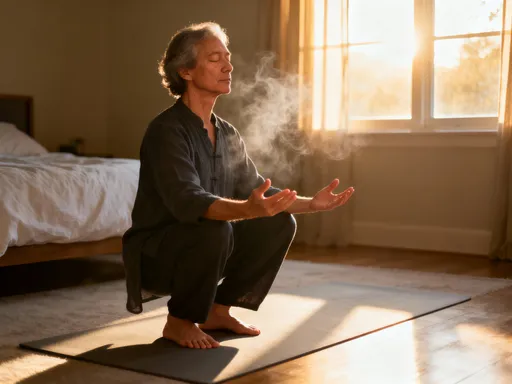
How I Finally Learned to Ride the Wave of My Emotions
We all feel overwhelmed sometimes—anger that flares up, anxiety that won’t quit, sadness that lingers. For years, I thought managing emotions meant pushing them away. But that only made things worse. What changed? Learning to regulate, not suppress. This shift didn’t happen overnight, but with practical steps, I found real balance. If you’re tired of emotional rollercoasters, what I discovered might help you too. Emotional well-being isn’t about avoiding discomfort; it’s about developing the inner tools to move through it with awareness and resilience. This is not a story of perfection, but of progress—one grounded breath, one honest journal entry, one mindful pause at a time.
The Breaking Point: When Emotions Take Control
There was a morning when everything seemed to collapse at once. The children were late for school, the coffee spilled, and an urgent work email arrived just as the car wouldn’t start. In that moment, a wave of frustration surged so powerfully that I raised my voice at my oldest child—someone I deeply love and never want to hurt. The instant it happened, I felt a sharp pang of regret. It wasn’t the first time emotions had taken the wheel, and it certainly wouldn’t be the last unless something changed. That moment became a turning point, not because it was unique, but because it was familiar. Many women in their thirties to fifties have stood in that same kitchen, heart pounding, voice tight, wondering how they got so overwhelmed by what began as a routine day.
For a long time, the cultural message had been clear: strong people keep their emotions in check. We were taught to equate emotional control with maturity, professionalism, and even moral strength. But this belief carries a hidden cost. It encourages suppression—the act of pushing feelings down, ignoring them, or pretending they don’t exist. The truth is, emotional reactivity is not a flaw. It is not a sign of weakness. Instead, it is a signal, much like pain in the body. When your foot hurts, you don’t scold yourself for feeling it; you examine what’s wrong. Emotions serve the same purpose: they alert us to unmet needs, boundaries being crossed, or values being challenged.
Recognizing emotional patterns before they escalate is one of the most powerful skills anyone can develop. It begins with awareness—noticing the early signs of rising tension: a clenched jaw, shallow breathing, a tightening in the chest. These are not failures; they are invitations to pause. When we learn to spot these signals early, we create space between stimulus and response. That space is where choice lives. Instead of snapping, freezing, or shutting down, we can choose how to respond. This is not about eliminating emotions, but about preventing them from hijacking our actions. The journey starts not with control, but with observation.
Emotion Regulation vs. Emotion Suppression: What’s the Real Difference?
At first glance, emotion regulation and emotion suppression may seem like two paths to the same destination: staying calm under pressure. But they are fundamentally different in both method and outcome. Emotion regulation is the practice of understanding, accepting, and guiding emotions in healthy ways. It involves acknowledging what you feel, exploring its source, and choosing a constructive response. Suppression, on the other hand, is the attempt to ignore, deny, or bury emotions. It’s saying, “I shouldn’t feel this way,” and trying to move on as if nothing happened. While suppression might offer short-term relief, it often leads to long-term consequences.
Research in psychology has shown that chronic emotional suppression is linked to increased stress, higher blood pressure, reduced immune function, and greater risk of burnout. When emotions are consistently pushed down, they don’t disappear. They accumulate. Like water behind a dam, they build pressure until they find a way to escape—often in unpredictable or disproportionate ways. A minor comment from a coworker might trigger an outburst, or a small household mess could feel unbearable. These reactions aren’t about the present moment alone; they are the overflow of unprocessed feelings from the past.
A helpful metaphor is to think of emotions as ocean waves. Trying to suppress them is like swimming against the current, fighting each wave as it approaches. The effort is exhausting, and eventually, you may be pulled under. Regulation, however, is like learning to ride the wave. You don’t deny its power. You don’t fight it. Instead, you position yourself to move with it, allowing it to carry you toward the shore. This doesn’t mean you enjoy every wave, but you learn how to stay afloat. One woman described this shift after years of bottling up stress at work. She began journaling each evening, naming what she felt without judgment. Over time, she noticed fewer headaches, improved sleep, and more patience with her family. The emotions hadn’t vanished, but her relationship with them had changed.
Learning to regulate emotions isn’t about becoming emotionless. It’s about becoming more yourself—more present, more compassionate, more in control of your responses. It’s the difference between reacting automatically and choosing intentionally. And while suppression may seem like strength, true strength lies in the courage to feel, to face discomfort, and to respond with care.
Why Your Brain Needs Regulation (Not Just Willpower)
When we’re in the grip of intense emotion, being told to “just calm down” rarely helps. In fact, it can make things worse. This isn’t because we lack discipline or willpower; it’s because of how our brains are wired. Emotional regulation isn’t a matter of self-control alone—it’s a neurological process. At the heart of this process is the amygdala, a small, almond-shaped region in the brain responsible for detecting threats and triggering emotional responses. When the amygdala senses danger—whether real or perceived—it activates the body’s stress response within milliseconds, long before the rational part of the brain has a chance to weigh in.
The prefrontal cortex, located behind the forehead, is responsible for decision-making, impulse control, and emotional regulation. But it operates more slowly than the amygdala. This means that in moments of high stress, the emotional brain reacts first, and the thinking brain catches up later. This biological reality explains why we sometimes say or do things in anger that we later regret. It’s not that we’re weak or irrational; it’s that our brain’s alarm system was activated before our reasoning could intervene. Understanding this helps remove the shame often associated with emotional outbursts. It shifts the question from “Why can’t I control myself?” to “How can I help my brain respond more effectively?”
The good news is that the brain is not fixed. It has the capacity to change and adapt through a process called neuroplasticity. This means that with practice, we can strengthen the connections between the amygdala and the prefrontal cortex, allowing the rational brain to respond more quickly and effectively to emotional triggers. Just as physical exercise builds muscle, emotional regulation practices build mental resilience. Over time, the gap between emotional reaction and thoughtful response can shorten. This is not an innate trait reserved for a few calm individuals; it is a skill that can be developed by anyone, at any age.
Think of it like learning to play an instrument. At first, your fingers fumble, the notes are off, and progress feels slow. But with consistent practice, muscle memory develops, and playing becomes more natural. The same is true for emotional regulation. Techniques like mindful breathing, self-reflection, and cognitive reframing are like daily scales and exercises for the brain. They may feel awkward at first, but over time, they rewire the way we respond to stress. The goal is not to eliminate emotion, but to create a more balanced internal system where feelings can be felt without taking over.
The 3-Step Grounding Method That Actually Works
One of the most effective tools for emotional regulation is a simple, evidence-based technique known as the Stop → Breathe → Name method. This three-step process is designed to interrupt the cycle of emotional reactivity and bring the nervous system back into balance. It can be used in the middle of a heated conversation, during a panic surge, or after a distressing event. What makes it powerful is its accessibility—it requires no special equipment, training, or privacy. It can be done in a bathroom stall, at a red light, or in the quiet moments before stepping into a room full of people.
The first step is to Stop. This means creating a physical pause, however brief. It could be taking a step back, closing your eyes for a few seconds, or simply freezing in place. The purpose is to break the automatic momentum of reaction. In that pause, you create space. You signal to your brain that you are no longer operating on autopilot. This small act of interruption is often enough to prevent an impulsive response. The second step is to Breathe—specifically, to engage in slow, diaphragmatic breathing. This means breathing deeply into the belly, inhaling for four counts, holding for one, and exhaling for six. This pattern activates the parasympathetic nervous system, which counteracts the fight-or-flight response. Within seconds, heart rate slows, muscles relax, and mental clarity improves.
The third and perhaps most transformative step is to Name the emotion. Instead of saying, “I’m fine,” or “This is stupid,” you practice emotional labeling: “I’m feeling anxious.” “I’m overwhelmed.” “I’m disappointed.” Research in affect labeling has shown that simply putting a name to an emotion reduces its intensity in the brain. When we name what we feel, the prefrontal cortex becomes more active, helping to regulate the amygdala’s response. It’s as if the brain says, “Ah, this is anxiety. I can handle anxiety.” Naming transforms a vague, threatening sensation into something specific and manageable.
One woman described using this method during a stressful commute when another driver cut her off. Her chest tightened, her hands gripped the wheel, and anger flared. Instead of honking or yelling, she stopped, took three deep breaths, and said aloud, “I’m feeling startled and angry.” Within moments, the intensity faded. She didn’t excuse the other driver’s behavior, but she no longer felt hijacked by her reaction. This method doesn’t erase emotion, but it changes the relationship to it. It turns chaos into clarity, one breath at a time.
Building Daily Habits That Strengthen Emotional Resilience
While crisis tools like the Stop → Breathe → Name method are essential, long-term emotional well-being depends on daily habits that build resilience over time. Just as brushing your teeth prevents cavities, small, consistent practices can prevent emotional buildup. These habits don’t need to be time-consuming or complicated. In fact, the most effective ones are simple, sustainable, and integrated into existing routines. The key is consistency, not intensity. Two minutes of mindful awareness each day can be more powerful than an hour once a month.
One powerful habit is the morning check-in. Before reaching for the phone or launching into the day’s tasks, take a moment to ask, “How am I feeling right now?” You don’t need to fix anything or analyze deeply. Just notice. Are you tired? Hopeful? Anxious? This brief self-inquiry sets a tone of awareness. It signals to your brain that your inner world matters. Another effective practice is journaling. Writing down thoughts and feelings helps process emotions before they accumulate. It doesn’t have to be structured or eloquent. A few sentences like, “Today I felt pressured at work. I’m worried I’m not doing enough,” can provide immediate relief. Over time, patterns emerge, revealing triggers and cycles that might otherwise go unnoticed.
Mindful pauses throughout the day are another valuable tool. These are short breaks where you step away from activity and reconnect with your body and breath. It could be while washing dishes, waiting for the kettle to boil, or walking from one room to another. Simply notice your feet on the floor, the air on your skin, the rhythm of your breath. These moments ground you in the present, reducing the mental chatter that often fuels anxiety. Some women find it helpful to set a gentle reminder on their phone or tie the practice to an existing habit, like after checking email or before eating lunch.
Tracking mood patterns can also be illuminating. Think of it as a weather report for your mind. Each evening, jot down your dominant emotion and a brief note about what influenced it. Over time, you may notice that certain days, interactions, or times of the month affect your mood more than others. This isn’t about judgment or fixing; it’s about understanding. When you know your emotional rhythms, you can plan accordingly—scheduling rest before a busy week, setting boundaries when you’re vulnerable, or celebrating small wins that boost your spirit. These daily habits aren’t about achieving constant happiness. They’re about cultivating a deeper connection with yourself, so you can navigate life’s ups and downs with greater ease.
When to Seek Help: Knowing the Line Between Management and Needing Support
It’s important to recognize that emotional regulation is a part of wellness, not a substitute for professional care. There is a difference between managing everyday stress and coping with deeper emotional challenges. While self-help strategies are valuable, they are not always enough. Knowing when to seek help is a sign of wisdom, not failure. Certain signs indicate that it may be time to talk to a licensed therapist or counselor. These include persistent feelings of numbness or emptiness, frequent panic attacks, difficulty functioning at work or home, or thoughts of self-harm.
Other warning signs include emotional patterns that feel beyond your control, such as repeated conflicts in relationships, unexplained physical symptoms like chronic fatigue or digestive issues, or a sense that you’re disconnected from yourself. If you find that your efforts to regulate emotions aren’t making a difference, or if you’re relying heavily on avoidance, substance use, or distraction to get through the day, professional support can provide the tools and insights needed for deeper healing. Therapy is not just for crisis; it is a space for growth, self-discovery, and lasting change.
Despite progress in mental health awareness, stigma still exists, especially among women who may feel they should be able to “handle it all.” But seeking help is not a sign of weakness. It is an act of courage and self-respect. A therapist is not a judge; they are a guide. They offer a safe, confidential space to explore emotions, identify patterns, and develop personalized strategies. Whether through cognitive behavioral therapy, mindfulness-based approaches, or talk therapy, professional support can accelerate progress in ways that self-help alone cannot.
Just as you would see a doctor for a persistent physical symptom, it’s equally important to care for your mental and emotional health. Therapy is not about fixing what’s broken; it’s about nurturing what’s possible. It allows you to understand yourself more deeply, heal old wounds, and build a life that feels more aligned and fulfilling. If you’ve been struggling in silence, know that you don’t have to do it alone. Reaching out is not the end of strength—it’s the beginning of a stronger, more compassionate relationship with yourself.
Putting It All Together: My Real-Life Emotional Toolkit
The journey toward emotional well-being isn’t about achieving perfection. It’s about building a toolkit that works for real life. For me, that toolkit includes the Stop → Breathe → Name method for moments of crisis, a morning check-in to start the day with awareness, a journal by the bed for evening reflection, and mindful pauses woven into daily routines. It also includes knowing when to reach out for professional support and giving myself permission to rest when needed. These practices aren’t followed perfectly every day, but their consistency has transformed my relationship with emotions.
What’s changed isn’t that I feel less anger, sadness, or anxiety. What’s changed is how I respond to them. I no longer see emotions as enemies to defeat, but as messengers with something to say. This shift has improved my relationships, reduced physical tension, and brought a greater sense of calm to my daily life. I’m more patient with my children, more present with my partner, and kinder to myself. The emotional rollercoaster hasn’t disappeared, but I’ve learned how to ride it with greater balance and grace.
Emotional mastery isn’t about never feeling upset. It’s about navigating feelings with clarity, compassion, and care. It’s about creating space between feeling and reacting. It’s about knowing that you are not your emotions, but the awareness behind them. Every small step—a deep breath, a named feeling, a moment of self-compassion—adds up. Progress isn’t measured in dramatic breakthroughs, but in quiet moments of choice.
If you’re reading this and recognizing your own struggles, know that change is possible. You don’t have to suppress, explode, or numb your way through life. You can learn to ride the wave. It takes practice, patience, and kindness toward yourself. But the reward is a deeper connection to who you are and the life you want to live. Emotional well-being isn’t a destination. It’s a daily practice. And every breath, every pause, every honest moment counts.